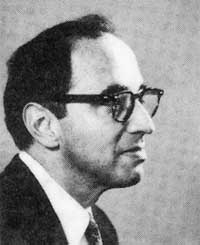
This post is a follow-up to my account of Kuhn's internalism. There will be at least two more posts in this series on Kuhn's historiographical legacy.
What did Thomas Kuhn take from his experience as a teacher of history of science? And what has he taught historians of science? The standard answer to the first question revolves around the "Harvard case method." Answers to the second question usually refer to the sociology of science, integrated HPS, and the rejection of cumulative narratives. What these answers overlook is our debt to Kuhn's influential big picture of modern physical science, which emerged not from case studies he developed at Harvard but a survey course he taught at Berkeley.
The Harvard case method and Structure
Here is the standard account in a bit more detail. In 1947 Kuhn was called up to lecture on the history of science as part of a new General Education curriculum for undergraduates at Harvard University. The course made use of the Harvard case method, a pedagogical technique that had been introduced in the Harvard medical and business schools over the previous half-century. The moving spirit of the course, Harvard president James B. Conant, was also the general editor of the series Harvard Case Studies in the History of Experimental Science, for which Kuhn wrote his first book, The Copernican Revolution (1957).
The case method had meant different things to different pedagogues, but at its heart was the idea that it is better to teach by practice than by precept. It is better to teach law, for example, by exposing students to a large number of concrete legal cases, than by filling them with abstract principles. General principles are not only unhelpful in practice, the argument went, but impossible to articulate in a way that captures all the richness and specificity of the particulars that those principles are supposed to summarise.
Many readers will recognise this as a key idea in Kuhn's most famous book, Structure of Scientific Revolutions (1962). According to Kuhn, researchers in the natural sciences are like students at Harvard law school. They learn by doing exercises, not by memorising laws; and what they learn cannot be fully captured by the general principles stated in modern-day textbooks or in their early modern equivalents. In Kuhn's terms, scientists learn by "exemplars," which are in turn one of the main ingredients of a "paradigm” [1].
When historians ask my second question—what have we learnt from Kuhn?—they tend to anchor their answers in Structure and in the famously slippery idea of a paradigm. By emphasising the tacit quality of paradigms, it is said, Kuhn taught us to study practices rather than theories. By showing just how different one paradigm is from the next, he taught us to reject progressive narratives about past science and to understand past thinkers on their own terms. By suggesting that one paradigm is as good as any other, others say, he paved the way for the sociology of science.
The Berkeley survey and the two traditions
That's the standard story, and there's a lot of truth in it. But there is also a different story that is rarely told and that does better justice to Kuhn's gifts as a historian. It is also a story we should take seriously if we are interested in the large-scale chronology of past science.
The first part of the story is best told by Kuhn himself. Here's an extract from an interview he gave in 1995, where he described the teaching he did after moving from Harvard to Berkeley in 1956.
Two of the courses [at Berkeley] were survey courses. I'd never given a survey course in history of science, I'd never had a survey course before in history of science. So that every lecture I gave was a research project and it was very good for me. After a while I couldn't get much [more] out of the survey course, but... I learned some of the problems of trying to organize the development of science. [For example] the standard division of history of science—ancient-medieval as one, and then modern science starting in the seventeenth century—it just doesn't work. There is a group of sciences which starts in antiquity and comes to a first major culmination in the sixteenth-seventeenth century, and that's mechanics, parts of optics, and astronomy. And then there are a whole lot of fields that scarcely exist in antiquity and have not yet got much identity, and they are the experimental fields. So I used to go through Newton in the fall, and then drop back in the spring to the beginning of the seventeenth century and pick up Bacon and Boyle and the experimental movements. That's a hell of a lot better way to organize a one-year survey than the standard way--and what it really is, is the origin of the article of mine on Mathematical versus Experimental Traditions in the Development of Physical Science [2].The article, published in 1976, distinguishes between the "mathematical" or "classical" sciences and the "experimental" or "Baconian" ones. According to Kuhn, the former emerged in antiquity and underwent a revolution in the 17th century, which is also when the experimental sciences emerged. Kuhn thought that the two traditions met briefly in Newton's optical research, but that they did not really converge until the Baconian sciences became mathematical in the decades around 1800 [3]. To Kuhn this was a powerful new way of thinking about past science in the longue durée. It clarified what was revolutionary about science in the 17th century, what has ground-breaking about Newton, and what was novel about science around 1800. At the same time it extended what historians know as the "Merton thesis," according to which modern science first flourished in Protestant nations. Kuhn noted apparent exceptions to this rule, such as the French thinker Blaise Pascal, and accommodated them by arguing that Pascal and other Continental Catholics tended to advance the mathematical but not the experimental tradition. The passage just quoted shows that these ideas emerged from a pedagogical context quite different from that of the General Education course at Harvard. Perhaps his Berkeley survey course was also responsible for the general problem that Kuhn identified at the start of the article. Teachers of history of science are in a bind, he said. They can teach the institutional and ideological factors behind the development of science as a whole; or they can focus on the technical details of a particular discipline and ignore the external factors. Kuhn saw himself as uniting these two approaches by describing the full range of factors behind what he called "the changing divisions of the sciences." What Heilbron learnt from Kuhn One historian who took these ideas up—the two-traditions narrative and the study of "changing divisions of the sciences"—was one of Kuhn's students at Berkeley, John Heilbron. Heilbron paid tribute to Kuhn in a 1993 chapter that ended as follows:
Kuhn's scheme [ie. the two-tradition narrative] is characteristic of his mode of analysis and indicative of his strength as a teacher. His clarity of thought, resourcefulness of argument, and enthusiasm for ideas inspired his students to fill in the blanks... The involvement of self while retaining respect for the historical actor, the technique of scrutinizing texts not for what sounds familiar but for what seems bizarre, and the reliance on a clear and simple schema as a first approximation to a historical reconstruction were lessons of great value... Eager to know how [his students'] research results would fit his general ideas, he gave us to understand that we were engaged in an intellectual adventure of great moment. Some of us think we still are [4].Some of the lessons Heilbron mentions here—and especially the one about reading texts for "what seems bizarre"—have been widely championed by historians of science. But that is not the case for the lesson that Heilbron puts the most weight on, ie. using "clear and simple schema" to get an initial grip on a large chunk of the past. Kuhn's own schema enters Heilbron's oeuvre as an interest in the period when the mathematical and experimental traditions are supposed to have merged. As Heilbron puts it in the article just cited, "[Kuhn's] aperçus have the merit of raising the question of how physics came to be quantified during the years 1780 to 1820." Three of Heilbron's books are meditations on this theme. The most recent of these, Weighing Imponderables and other Quantitative Science Around 1800 (1992), has a title that speaks for itself. The Quantifying Spirit in the Eighteenth Century (1990), which Heilbron co-edited, is an attempt at a unified account of the late-18th-century quantification of physics, meteorology, chemistry, botany and other branches of science. My third example is the earliest, Heilbron's magisterial study of early modern physics, Electricity in the 17th and 18th Centuries (1979). The book kicks off with a one-paragraph summary of Kuhn's two-traditions narrative. It starts "breaking new ground," in the author's words, with a chapter on, of all things, the quantification of physics from around 1760. And when Heilbron finally gets to the topic promised in the title, ie. electricity, the main thrust of his narrative is the conceptualisation, measurement, and mathematisation of basic electrical quantities (especially charge, capacity and tension). These echos of Kuhn's 1976 paper are made all the more striking by the fact that Heilbron's Electricity creates problems for Kuhn's most famous book. In Structure, Kuhn used Benjamin Franklin's explanation of the Leyden Jar as a leading case of a paradigm-creating exemplar—a striking application of a theory that turns a confused and disparate field into subject of unified, systematic research, otherwise known as "normal science." By contrast, Heilbron's book shows that Europe's leading electricians were already unified around a theory (that of the Frenchman Jean-Antoine Nollet) before Franklin came along, and that electrical science had already been placed on a systematic footing by Nollet's teacher, Charles Dufay. Moreover, Franklin's account of the Leyden Jar made a splash mainly in France, and mainly because of the interest whipped up by Nollet's enemies, who tended to ape Franklin's arguments and ignore Nollet's well-considered responses. (See here for a primer on the Dufay-Nollet-Franklin sequence). Nor was the Leyden jar one of those "shy anomalies" (Heilbron's phrase) that fell outside the narrow vision that is supposed to beset the members of a Kuhnian paradigm. On the contrary: as Heilbron shows, the Leyden jar was met on all sides with "frank admissions" of the inadequacy of accepted theory. Nollet himself admitted the anomalousness of the Leyden jar in the very paper in which he announced the discovery of the instrument. True, Heilbron's work creates problems not just for Structure but also for Kuhn's two-tradition narrative. The problems with the latter are that Kuhn omits such things as astrology, geography, and fortification from his account of the classical tradition; that these branches of mixed mathematics did not "turn into physics" in the way that (say) geometrical optics did; that natural philosophy, and not just the mathematical tradition, suffered major transformations in the 17th century; and that the "quantifying spirit" effected all branches of science in the 18th century, not just physics. Nevertheless, Heilbron makes it clear, in the chapter quoted above, that the two traditions are a "convenient fiction" that he hopes to "extend" in his own work. The descriptive lesson of this post is that the historical fruits of the Berkeley survey have survived at least as well as the philosophical fruits of the Harvard case method. The normative lesson is that historians of science should place as much value on large-scale historical sketches—Heilbron's “clear and simple schema”—as they do on the sensitive reading of past texts or on the avoidance of progressive narratives. *** In my next post I hope to show that Heilbron was not the only one to get historiographical mileage out of Kuhn's two-traditions narrative. References [1] This account of Kuhn's debt to the Harvard case method is a summary of chapters 2 and 6 of Joel Isaac, Working Knowledge: Making the Human Sciences from Parsons to Kuhn (Harvard: Harvard University Press, 2012), a book that I recommend even if its emphases are different from my own. [2] Kuhn, “An Interview with Thomas Kuhn,” in The Road Since Structure, eds. James Conant and John Haugeland (Chicago: University of Chicago Press, 2000), 294-295. [3] Kuhn, “Mathematical Versus Experimental Traditions in the Development of Physical Science,” Journal of Interdisciplinary History 7 no.1 (1976), 1-31. [4] Heilbron, “A Mathematician's Mutiny, With Morals,” in World Changes: Thomas Kuhn and the Nature of Science, ed. Paul Horwich (Pittsburch: University of Pittsburgh Press, 1993), 81-127. Expand post.
Malheureusement je ne traduis plus tous les posts que j'écrit sur ce blog. Si vous voudriez lire les posts qui ont été traduits, veuillez cliquer ici.
Agrandir ce message.